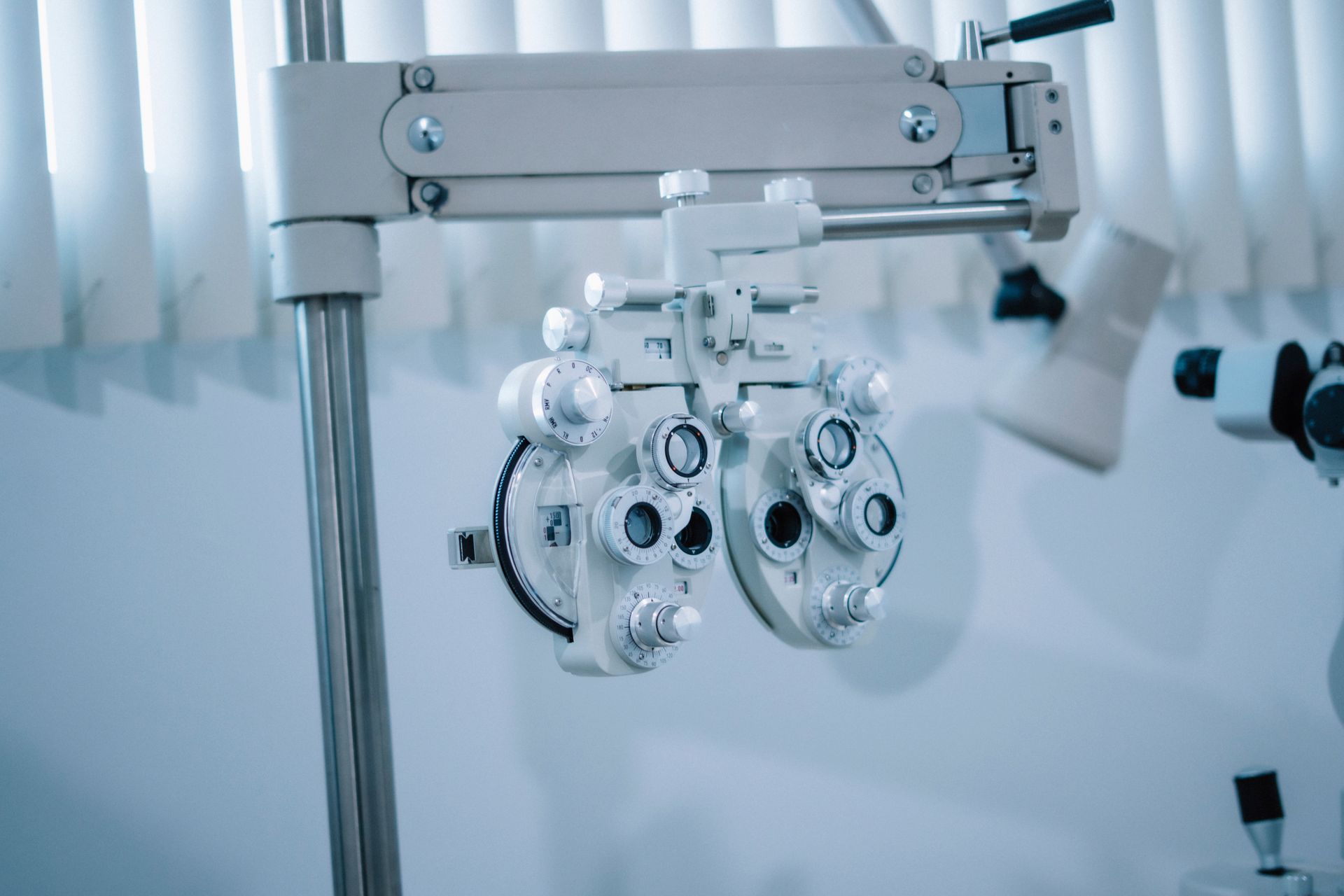
The lens implanted during cataract surgery shapes how you'll see for years to come. We'll help you choose the one that fits your goals.
During cataract surgery, your clouded natural lens is replaced with a clear intraocular lens (IOL). Today’s premium lenses can do more than restore clarity — some reduce your dependence on glasses for distance, intermediate, and near vision. Here are the options we most often discuss.
A monofocal lens provides clear vision at a single distance — usually distance vision — with glasses typically used for reading. It is the standard lens covered by most insurance plans.
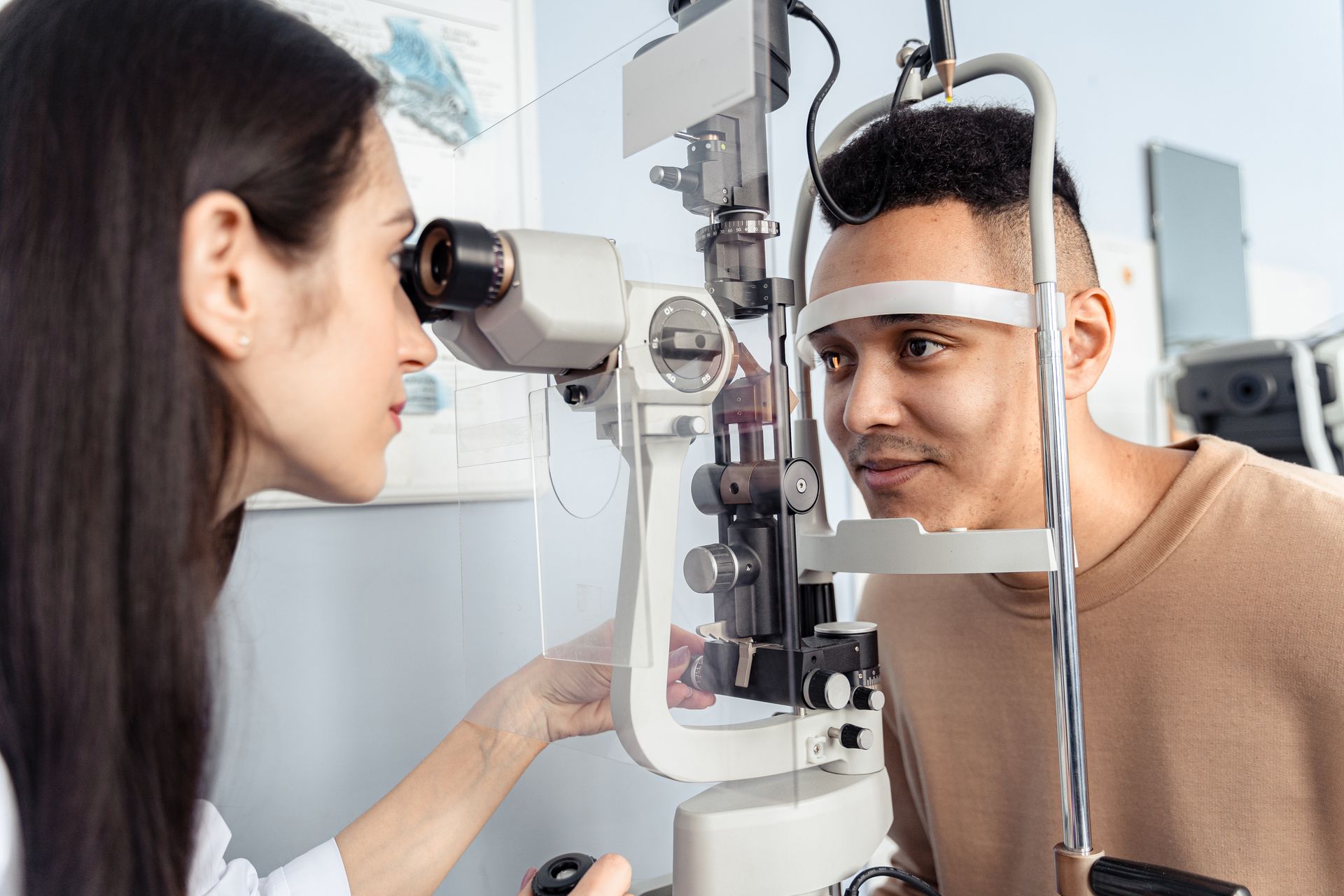
For patients with astigmatism, a toric lens corrects the corneal shape at the same time as the cataract, sharpening distance vision without the need for astigmatism-correcting glasses.
Multifocal lenses provide clear vision at multiple distances, reducing the need for glasses for both near and far tasks.

The Vivity lens uses non-diffractive extended-depth-of-focus technology to deliver a continuous range of vision — distance through intermediate and functional near — with minimal glare and halos.
A lens implant or intraocular lens (IOL) is an implanted synthetic lens that replaces the eye’s natural lens. Due to the amazing advancements in IOL technology, a patient can achieve excellent vision quality from a lens implant.
Depending on the type selected, an IOL can also correct the eye’s existing refractive error (nearsightedness, farsightedness, and astigmatism).
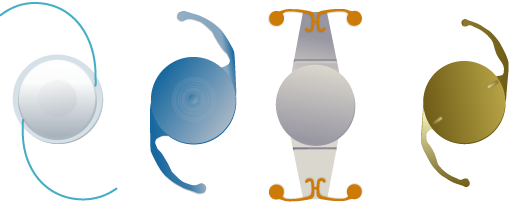
Monofocal IOLs are the ‘standard’ or conventional type of IOL. By definition, a monofocal IOL provides good vision correction for one distance only. The power of the lens is pre-calculated for each individual, generally for far vision.
However, some patients, with the recommendation of their doctor, may choose to correct for near vision.
If corrected for far vision, glasses for reading will still be needed, and patients with astigmatism may still require glasses to sharpen their distance vision.
Toric IOLs are specifically designed to correct astigmatism. The shape of the lens offsets the imbalance created by the irregular shape of the cornea, similar to technology used in contact lenses.
These lenses allow a higher quality of vision and more freedom from glasses in patients with astigmatism.
Multifocal IOLs provide vision correction at all distances. Multifocal IOLs are more costly and generally not fully covered by insurance, but they are frequently preferred over monofocal IOLs because they can markedly reduce the need for glasses.
The Light Adjustable Lens is the first and only intraocular lens that can be fine-tuned after cataract surgery. Rather than locking in your final prescription on the day of surgery, the LAL lets your surgeon adjust the lens while it is already in your eye, so you can preview and choose the vision that suits you best.
How it works: the lens is made of a special photosensitive material. About two to three weeks after surgery, once your eye has healed, you return for a series of brief in-office light treatments. Each treatment reshapes the lens slightly to correct any remaining nearsightedness, farsightedness, or astigmatism. Most patients have two to four adjustments, each taking only a few minutes, followed by two final “lock-in” treatments that make the prescription permanent.
Who it suits: patients who want the highest chance of hitting their vision target, and especially those who have had previous vision-correction surgery or who have astigmatism, where predicting the right lens power in advance is harder.
What it asks of you: UV-protective glasses must be worn during all waking hours from the day of surgery until the final lock-in treatment is complete. Keeping every adjustment appointment is essential to the result.
The Light Adjustable Lens is a premium option and is not fully covered by insurance. We will review whether it is a good fit for your eyes and your goals during your cataract evaluation.

Call 614-488-8000 and our team will be glad to help.